A software engineer in Pune has his money in three places. Some of it sits in his employer's stock, granted to him every year for the last eight years. Some of it is in a flat ten minutes from the office. The rest is in a fixed deposit at the bank his father has used since 1994.
He does not think of this as a risky arrangement. Every single piece of it is something he knows well. That is exactly why it is worth a second look.
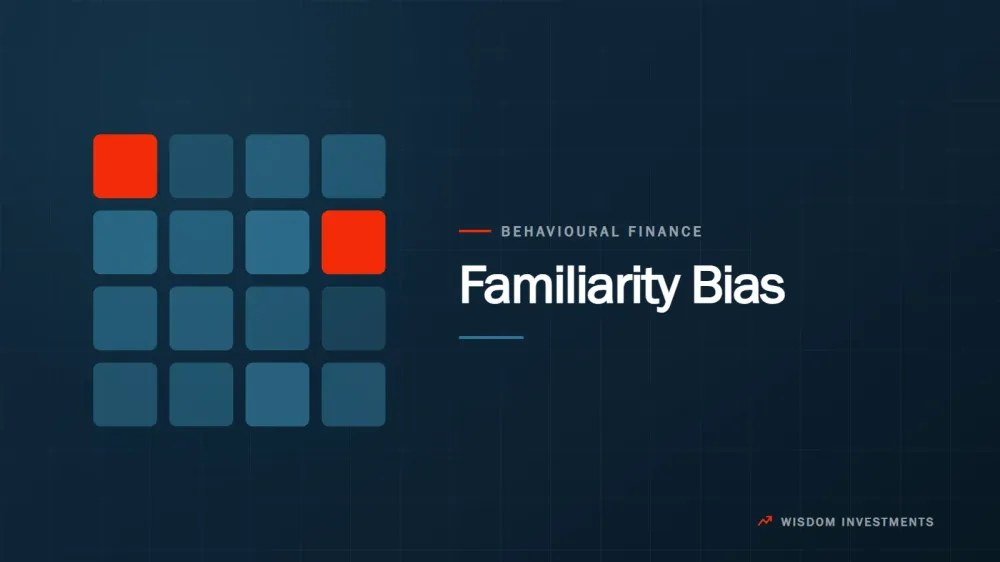
Familiarity bias is the habit of treating what we recognise as safer than what we don't. It shows up everywhere, not just in money. We buy the same brand of shoes, order the same dish at the same restaurant, take the same route home even when there is a faster one. Most of the time this costs us nothing. With money, it can cost a great deal.
Recognition is not information
When you know a company's name, its office, its people and its products, your brain quietly converts that into a judgement about how likely it is to do well. But recognition and information are different things. You may know your employer's canteen menu and still know nothing about how much debt it carries, how its customers are placed, or what happens to it if one large contract goes away.
The feeling of comfort is real. The safety it implies is not something you actually checked.
Where it usually shows up
- Your employer's stock. The company you work for is the one you feel you understand best, so its shares feel less risky than a company you have never visited.
- Your own city's property. A flat in a locality you drive through daily feels solid in a way that the same flat in another state never would.
- Your own industry. People in pharma are drawn to pharma companies; people in banking are drawn to banks. They are reading the same trade news either way, so it feels like an edge.
- What your parents held. If everything at home was a bank deposit or gold, those two feel like the natural shape of money, and everything else feels like a departure.
- Brands you personally buy. Owning the shares of a company whose soap is in your bathroom feels sensible. It tells you almost nothing about the price you are paying for those shares.
The real cost is not low returns. It is everything moving together
Go back to the engineer. His salary, his employer's stock, the property market in the city where his industry is concentrated, and his own future job prospects are all tied to the same handful of forces. If his sector has a bad two years, he does not get one problem. He gets four at once, and they arrive in the same month.
That is what concentration really means. Not that any one holding is bad, but that you have unknowingly bet the same way several times over and called it diversification because the items look different on a statement.
A question worth asking about each holding
You don't need to overhaul anything today. Two questions will do most of the work.
First: if this fell sharply next year, what else in my life would be falling at the same time? If the honest answer is "my income", you have found a concentration you did not know you had.
Second: why do I own this? Write the reason down in a sentence. If the only sentence you can produce is "I have always had it", or "my family has always had it", or "everyone at work has it", then what you have is familiarity, not a reason. That is worth knowing before you add more of it.
Benjamin Graham put it bluntly in The Intelligent Investor: the investor's chief problem, and probably his worst enemy, is likely to be himself. Familiarity bias is one of the quieter ways that happens. Nothing about it feels like a mistake while you are making it. It feels like good sense.
This article is general information for education only. It is not investment advice and does not take account of your circumstances. Investments in securities are subject to market risks; please read all related documents carefully before investing.