Consider someone who set up a monthly investment of ₹10,000 in January 2008 — a genuinely awful month to have started, as it turned out, since the global financial crisis broke a few months later. By March 2009 he had made fifteen contributions, ₹1.5 lakh in total, and his statement showed comfortably less than he had paid in.
Fifteen months of doing the disciplined thing, and the reward was a number in red. Sitting in front of that statement, what would you have done?
Most people stop — not by reasoning their way to it, but because handing over another ₹10,000 to something that has only ever taken money away feels absurd. The instinct is not stupid. It is working on the wrong timescale.
What volatility actually is
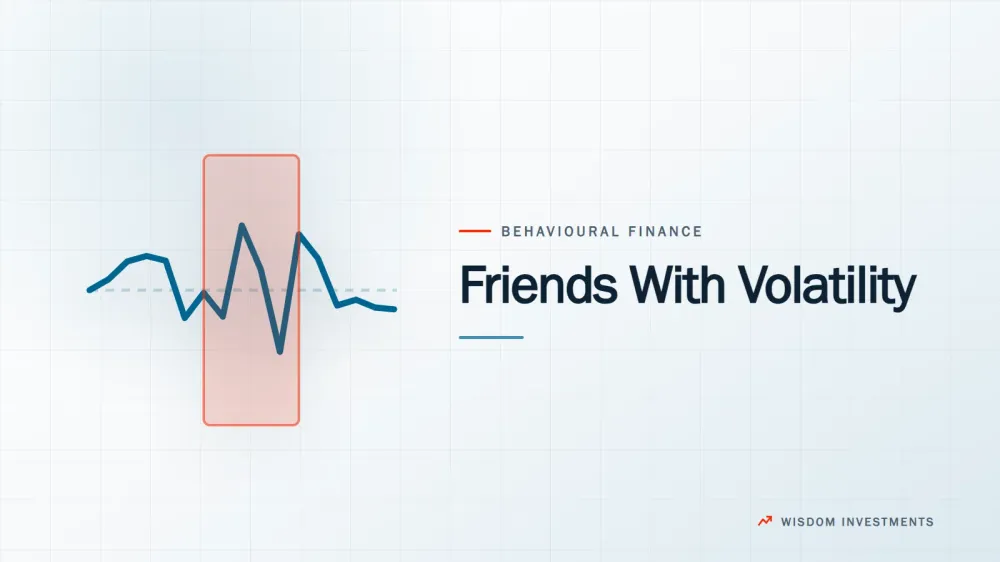
Volatility is a plain word dressed up. It means the value moves about — up and down, sometimes a lot, without warning. What people miss is that this is not a fault in equity investing that better products have fixed. It is a permanent feature of owning a share of a business: prices move because opinions about the future move, and opinions move constantly. Anything that can rise sharply can fall sharply, and anything promising the first without the second deserves a hard look.
So the choice is not between a volatile route and a smooth one that arrives at the same place. It is between accepting the movement or not being in that asset at all.
The mechanical thing a regular contribution does
Here is the part that is genuinely true, stated narrowly so it is not mistaken for something bigger. If you put in a fixed rupee amount on a fixed date, then when prices are low it buys more units and when prices are high it buys fewer. That is arithmetic, not a strategy. So a falling market is the period in which your instalments pick up the most units per rupee — someone who kept going through 2008 and 2009 was buying at the lowest prices of that stretch, precisely when it felt worst.
Now the limit, and it matters. Buying more units when prices are low does not mean you will make money. If prices stay low, more units simply means more of something worth less. A regular contribution lowers your average purchase price. It does not create a return, it does not protect you from loss, and nobody can tell you what those units will be worth later. Making friends with volatility does not mean expecting to profit from it. It means not being driven out by it.
Why stopping is the expensive move
Someone who stops during a fall usually thinks they are pausing. In practice very few restart on the way down. They wait for things to look safe, and things only look safe after prices have already recovered a good distance. The pattern becomes: keep paying while prices are high, stop while they are low, resume once they are high again — the opposite of what was intended. The damage is rarely the fall itself. It is the years of not being invested that follow, and the conclusion, drawn at the worst possible moment, that the whole asset class is a con.
What to actually weigh
If a falling market would make you stop, that is not a character flaw and it is not fixed by being told to be patient. It is a signal about the design of the plan. Three things worth being honest with yourself about:
- How long the money can genuinely stay put. Money you may need in three years and money you will not touch for twenty do not belong in the same place.
- Whether there is a buffer elsewhere. People forced to sell during a fall usually sell because a job went or a bill arrived, not because they lost their nerve.
- The size of the commitment. A monthly amount that is comfortable when things are calm can be the first thing cut in a bad year. An amount you can maintain through a difficult stretch does more for you than a larger one you abandon.
Whether equity suits your circumstances, your horizon and your temperament at all is a question for you — worth working through with someone qualified and registered to advise you.
This article is general information for education only. It is not investment advice and does not take account of your circumstances. Investments in securities are subject to market risks; please read all related documents carefully before investing.