Imagine you found ₹10,000 in an old jacket. Pleasant, but your month would look much the same. Now imagine ₹20 lakh. Now ₹5 crore. Somewhere between those three numbers, your answer stops being "nice" and starts being "this changes things".
Where that switch happens tells you more about your finances than your salary does. It is a rough reading of how much capacity you already have, and capacity is the thing that actually moves over a working life.
Money works in steps, not in a smooth slope
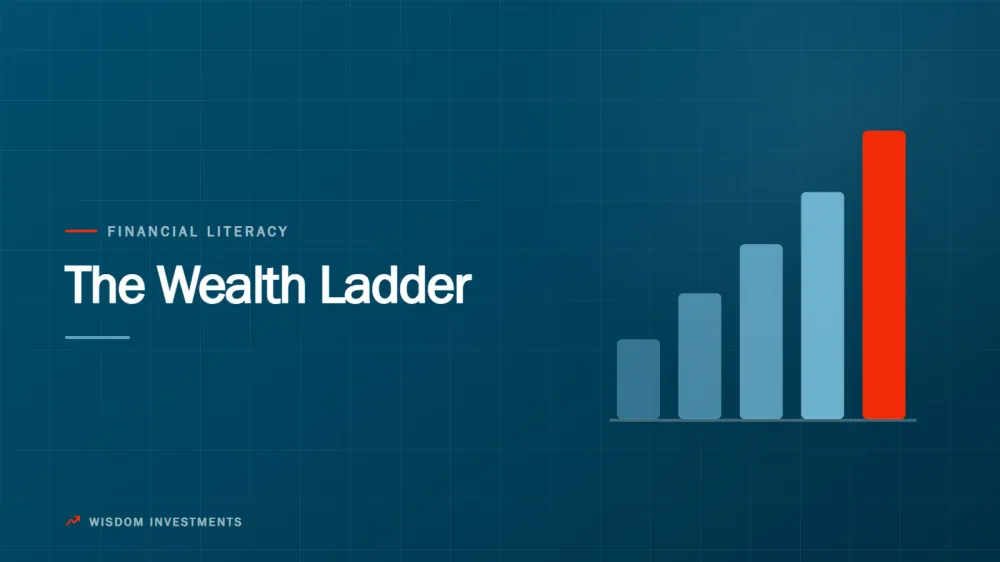
It helps to think of financial capacity as a staircase rather than a ramp. On each step, a certain class of decision stops requiring thought. Roughly:
- Running out before payday. The third week of the month is tight, and an unexpected bill is a problem.
- Grocery freedom. You buy what you need at the shop without doing sums in your head.
- Eating-out freedom. You choose from the menu by what you feel like, not by the prices on the right-hand side.
- Travel freedom. A holiday is a decision about time off, not about whether the money exists.
- Housing freedom. The home you want is within reach without reorganising your whole balance sheet around it.
- Giving freedom. You can give away amounts large enough to change someone else's situation.
Nobody can put an exact rupee figure on those steps. It depends on where you live, how many people depend on you, and what you actually want. The steps are useful anyway, because they explain something people find confusing: why a given sum feels enormous to one person and unremarkable to another.
An extra ₹10 lakh handed to someone on the first step can genuinely move them a rung. The same ₹10 lakh handed to someone two steps up barely registers, because the thing that would move them again is much larger. The value of a rupee is relative to the step you are standing on.
Two people, the same phone, different decisions
Say two friends are buying a new phone, and the better model costs ₹50,000 more. One of them feels that ₹50,000 clearly and takes the cheaper model. The other doesn't feel it enough to bother economising and takes the better one.
Neither is being clever or foolish. They stand on different steps, and the same ₹50,000 carries a different weight for each. Worth remembering before you compare your spending to anybody else's, including people whose spending you only see on a screen.
How you actually move up a step
The mechanism is unglamorous. You move up when the money you keep gets put to work, and then the returns on that money start doing some of the work as well.
That is the whole engine. Early on, almost everything in your pot is money you put there yourself. Later, if it has been invested for long enough, a meaningful part of the pot is growth on earlier growth rather than fresh savings. Assets, in other words, buy you more capacity, and that capacity buys more assets. This takes a long time and is not guaranteed — markets do not owe anyone a smooth ride — but the direction is the point.
What stops most people is not a lack of returns. It is spending at the step above the one they are standing on. Book a holiday you cannot really afford and you have not moved up a step; you have simply borrowed against the one you were on. Keep your spending inside your current step and the surplus goes to work instead.
This is not an argument for hoarding
Some people say your consumption should never rise as your net worth does. I don't agree. A moderate rise in how you live is a large part of why you were doing any of this. There is more to a life than a bigger balance.
What works is being deliberate about which spending you let rise. I will happily pay for a good meal out, and I will still shift the dates of a family holiday by three weeks to travel before the season starts, because the trip is worth a lot to me and the peak-season premium is worth nothing. That is not deprivation. That is spending at my step and letting the difference compound.
Work out honestly which step you are on, spend within it, and put the gap to work. The steps above look after themselves.
This article is general information for education only. It is not investment advice and does not take account of your circumstances. Investments in securities are subject to market risks; please read all related documents carefully before investing.