There is someone in most offices who earns roughly twice what everyone around them earns and is visibly more anxious about money than any of them. Better car, bigger flat, better holidays, and a tightness whenever a large bill is due. Everyone assumes they are comfortable. They are not, and they cannot say so.
It is the clearest evidence for the point of this article: what comes in and what you keep are two separate numbers. Only one of them is wealth, and it is not the one people can see.
Two lives at the extremes
Curt Degerman spent most of his adult life cycling around a small town in northern Sweden, collecting cans and bottles from bins and selling them for the deposit. To everyone who passed him he looked like a man with nothing. He had no loans, almost no expenses, and he invested what he accumulated. When he died in 2008, his estate was reported at around 1.4 million dollars.
At the other end are the sportspeople and performers who earn extraordinary sums in a short career and end up in a bankruptcy court a decade or two later. Boris Becker, who won Wimbledon at seventeen and earned for years at the very top of tennis, was declared bankrupt in 2017. In professional sport this is a familiar story rather than a rare one.
The two lives look like opposites and are really the same lesson from either end. What came in decided nothing. The gap between what came in and what went out decided everything.
Wealth is the spending you did not do
This runs against how everyone reads the world. When you see a car, you are not seeing wealth. You are seeing money that has already left. The wealth in that transaction, if there is any, is invisible by definition, because it is the money still sitting somewhere untouched.
So the visible signals are close to useless. Everything you can see was paid for, and some of it is still being paid for.
Name what you are giving up
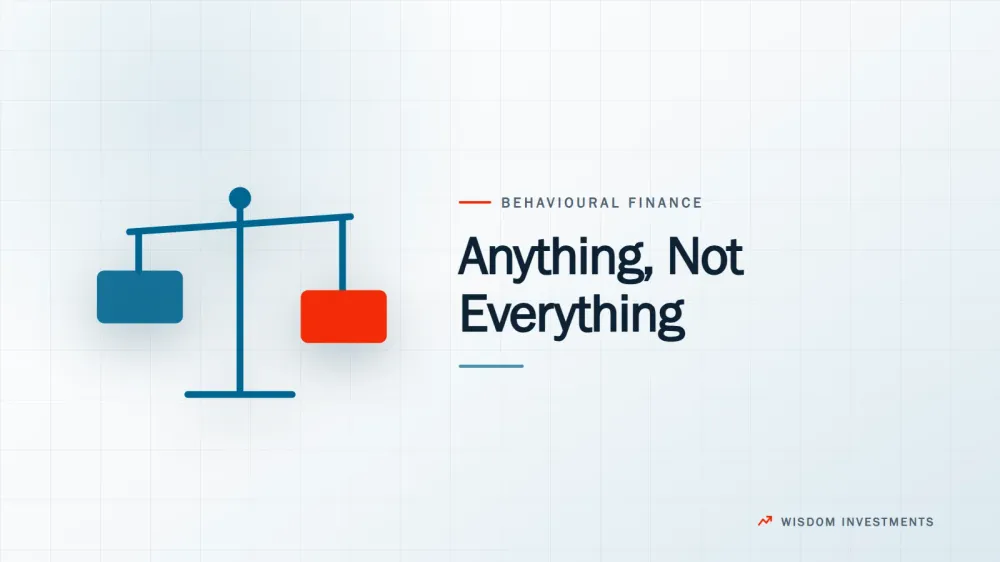
Here is where the title comes from. You can afford almost any single thing. At the moment of purchase, "can I afford this" nearly always answers yes, which is why it is the wrong question. It is a question about one number, and the decision is really about two.
The better question is: what am I choosing this instead of? And the answer has to be a specific thing, not the vague word "savings". Instead of the upgraded phone: a fortnight somewhere you have never been. Instead of the larger car: two years off the end of your working life.
Do that honestly and most purchases survive. If you name the alternative and still want the phone, buy the phone; you have made a real choice and you will not resent it later. Clothes, gadgets, restaurants and travel are all good things to spend money on when they are what you actually want.
The failures are the purchases where you cannot name what was given up, because nothing was consciously given up. Something was still given up. You just did not watch it go.
The floor that keeps rising
There is a second mechanism working underneath, and it explains the anxious colleague.
Most upgrades are not one-time. A bigger flat is a bigger rent every month, plus more to furnish, more to maintain, higher bills. A better car brings insurance and servicing at the new level. Each improvement quietly becomes the new floor, and a floor is not a purchase. It is a fixed cost you have to earn again every month.
Raise it far enough and a high income stops being freedom and becomes an obligation. You cannot take a lower-paid job you would enjoy more, sit out a bad year, or absorb a shock. On paper you are doing extremely well. In practice you have no room to move. The person earning half as much with a low floor has options you do not, and those options are worth more than most of what the extra income bought.
The point is not less
None of this is an argument for spending less as a virtue. It is an argument for spending on purpose, which sometimes means spending more on one thing and always means knowing what you traded for it.
You can afford anything you genuinely want, one thing at a time, if you are willing to say out loud what you are giving up to have it. The trouble only starts when you decline to name it.
This article is general information for education only. It is not investment advice and does not take account of your circumstances. Investments in securities are subject to market risks; please read all related documents carefully before investing.